

How much does a website cost in 2026? US ranges: $0-$50/month DIY, $2,000-$10,000 freelancer, $10,000-$40,000 agency, $40,000+ apps.
How Much Does a Website Cost in the US in 2026?
In the US in 2026, a website typically costs $0-$50/month for a DIY builder, $2,000-$10,000 for a freelancer-built marketing site, $10,000-$40,000 for an agency-built marketing site, and $40,000-$150,000+ for a custom web application or platform. The right number depends on what the site must do, not what you call it. This guide shows the real ranges, the monthly fees, and how to read quotes so you do not get surprised later.
The short answer: US website cost ranges in 2026
US pricing looks “wide” because people lump very different products into the same word, website. A one-page builder site and a multi-role customer portal are not variations of the same thing. They are different categories with different risk, different ownership, and different labor requirements.
- DIY builder (Wix, Squarespace, Framer): $0-$50/month plus your time. Good for a personal site, a very small brochure site, or a fast validation page.
- Freelancer-built marketing site: $2,000-$10,000 one-time. Usually a small set of templates, a contact flow, and light CMS setup.
- Agency-built marketing site: $10,000-$40,000. Strategy and structure, custom design, content support, CMS, performance and accessibility built in.
- Custom web application or platform: $40,000-$150,000+. Accounts, permissions, dashboards, workflows, and integrations that behave like software.
The jump between tiers is not “more pages.” It is more decision-making, more implementation detail, and more accountability. When a quote is higher, you are often paying for fewer assumptions and fewer future re-builds.
What actually drives the price
If someone gives you a firm number before they understand your requirements, they are either guessing, padding, or planning to charge for change orders later. In practice, these factors move the final cost more than anything else.
- Custom design vs template. A template is fast, but it comes with pre-baked layout rules and components. A custom design system takes longer, but it is what makes the site look and feel like your company. If you want to understand the design side in more detail, compare this guide on UI/UX design cost to what is included in typical build quotes.
- Functionality and business logic. Pricing rules, user accounts, multi-step forms, gated content, permissions, audit logs, and admin workflows are engineering work. They are rarely “just a plugin,” especially when you need reliability, security, and good UX.
- Integrations. Connecting a site to a CRM, a marketing automation platform, analytics, payments, scheduling, or a product database can be a small task or a project of its own. The cost depends on how clean the third-party APIs are and how much server-side work is required.
- Content readiness. Copywriting, photography, video, migration from an old CMS, and approvals can stretch the schedule fast. Many website projects slip because content is not ready, not because development is slow.
- Performance and accessibility. Performance targets tied to Core Web Vitals and accessibility aligned with WCAG are not optional polish for serious businesses. They affect SEO, conversion, and legal exposure. It is far cheaper to build them in than retrofit them.
If you are comparing quotes and they look wildly different, the difference is usually hidden in one of the bullets above. The lowest quote often assumes the most away.
Cost by website type
Here is how the same budget logic plays out across the projects US businesses commonly commission. These ranges are not “nice-to-have” numbers. They reflect what it takes to get a site that is stable, maintainable, and aligned with what buyers expect in 2026.
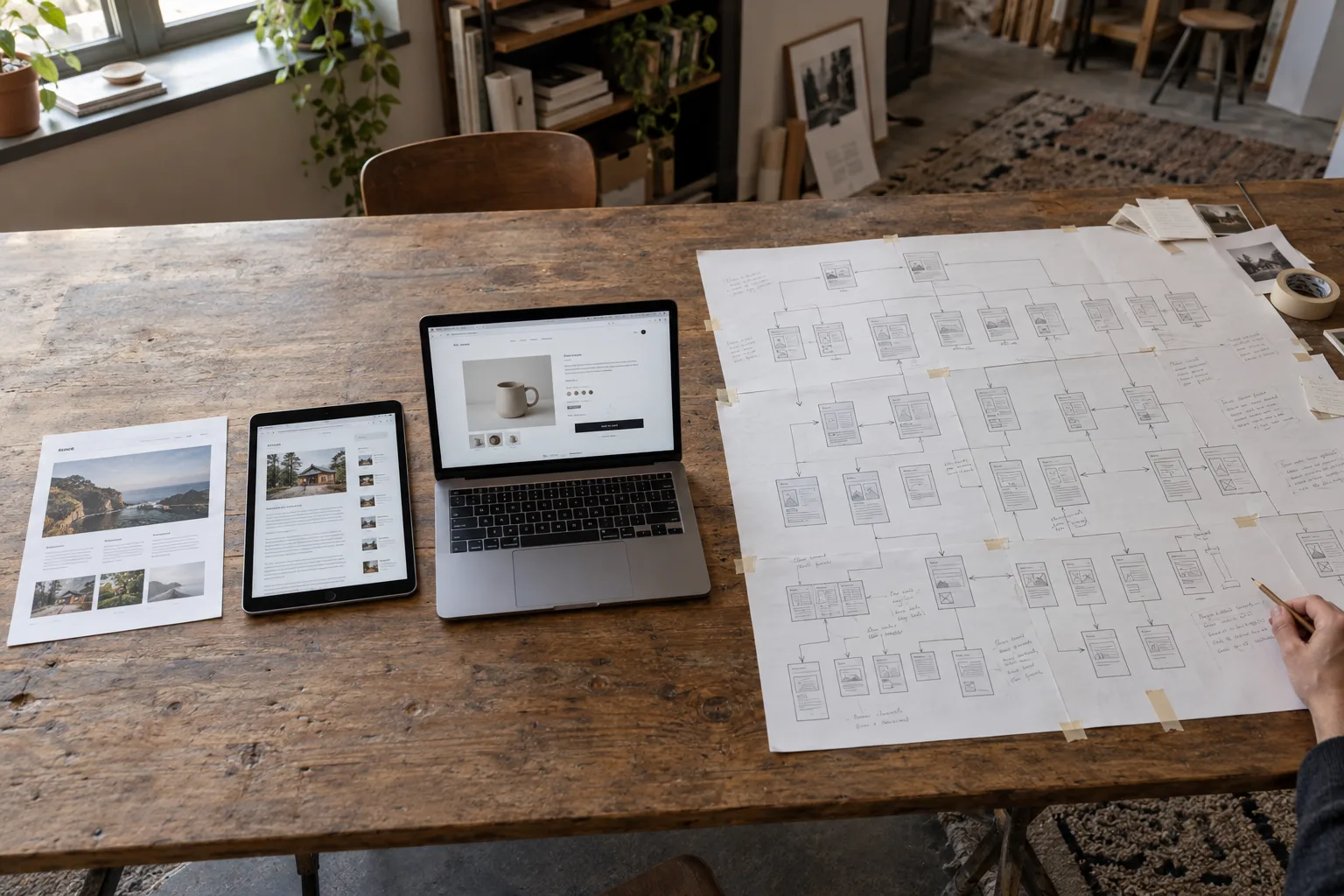
- Brochure / small business site: $5,000-$20,000. The job is credibility and lead capture, not software behavior. You pay for a clean structure, a strong mobile experience, a CMS that is easy to update, and the basics done right.
- Content / publishing site: $15,000-$50,000. The spend goes into information architecture, editorial workflows, SEO structure, and performance at scale. If content drives pipeline, this is not a “simple website.”
- E-commerce: $15,000-$100,000+. Checkout, tax, shipping rules, inventory, and fraud controls are the baseline. Cost climbs with custom merchandising, subscriptions, multiple currencies, custom integrations, and complex product data.
- Custom web app: $40,000-$150,000+. This is software delivered through a browser. A landing page is “read-only.” A web app is “do work.” For a deeper breakdown, see custom web application development cost.
Where people get burned is mismatching the category to the real requirement. If you need app behavior but buy a brochure site, you will rebuild. If you need a brochure site but pay for custom platform engineering, you will overspend.
How much does a website cost per month?
Monthly website cost is usually a mix of subscription fees, infrastructure, and the ongoing work required to keep the site secure, current, and effective. For buyers, this matters as much as the build price because your website is not a one-time asset. It is a managed system with recurring costs.
Typical monthly line items
- DIY builder subscription: $0-$50/month plus your time. Many builders bundle hosting, but you still own operations like updates, content, and basic SEO.
- Hosting and infrastructure: $20-$500+/month. Simple marketing sites can be on the low end, and application servers and higher traffic sites move up.
- Domain, SSL, and email: usually under $100/year combined for the basics. This is small, but it is recurring and easy to forget until renewal hits.
- Maintenance and updates: plan for 15-25% of the build cost per year, or a retainer. This covers dependency updates, security patches, uptime monitoring, backups, and small fixes.
- Content and SEO over time: the site will not stay effective by itself. Content updates, new pages, technical SEO checks, and conversion testing are operating costs, even if you do them internally.
Two simple monthly totals (using only the ranges above)
- Small business DIY site monthly: $0-$50/month (builder) plus domain, SSL, and email (usually under $100/year combined). If you add separate hosting, add $20-$500+/month. If you hire maintenance help, add a retainer or the equivalent of 15-25% of what you paid to build.
- Agency-built marketing site monthly: hosting $20-$500+/month plus maintenance equivalent to 15-25% per year of a $10,000-$40,000 build. That maintenance range works out to about $125-$833 per month, plus domain, SSL, and email (usually under $100/year combined), plus content and SEO work.
The takeaway is simple: the build is the entry fee. The real question is whether you are budgeting for ownership. If nobody is responsible for performance, accessibility, and updates after launch, the cost shows up later as rushed fixes and forced re-platforming.
Agency vs freelancer vs DIY in the US market
The three paths can all be correct. They fail differently, and the best choice depends on how business-critical the site is and how much internal capacity you have.
- DIY is the cheapest cash outlay and can be the right call when the goal is speed, simplicity, and low risk. The hidden cost is your time, plus the ceiling you hit when the builder cannot support the experience or integrations you need.
- A freelancer can be great value for a small, well-defined build. The risk is continuity. If the site becomes important and the freelancer is unavailable, you have a single point of failure and often limited documentation.
- An agency costs more up front because you are paying for a team and a process. The trade is lower delivery risk, better QA, and a clearer path to ongoing maintenance. If you are evaluating agencies seriously, see this guide on choosing a custom web development agency.
For commercial buyers, the practical difference is not “freelancer vs agency.” It is whether the vendor can carry the responsibility for the outcome you need, including quality, performance, accessibility, and post-launch support.
Why website quotes for the same project differ
Quotes differ because vendors are not quoting the same thing, even when the proposal titles look identical. The gap is usually in scope assumptions and in what the team is willing to own.
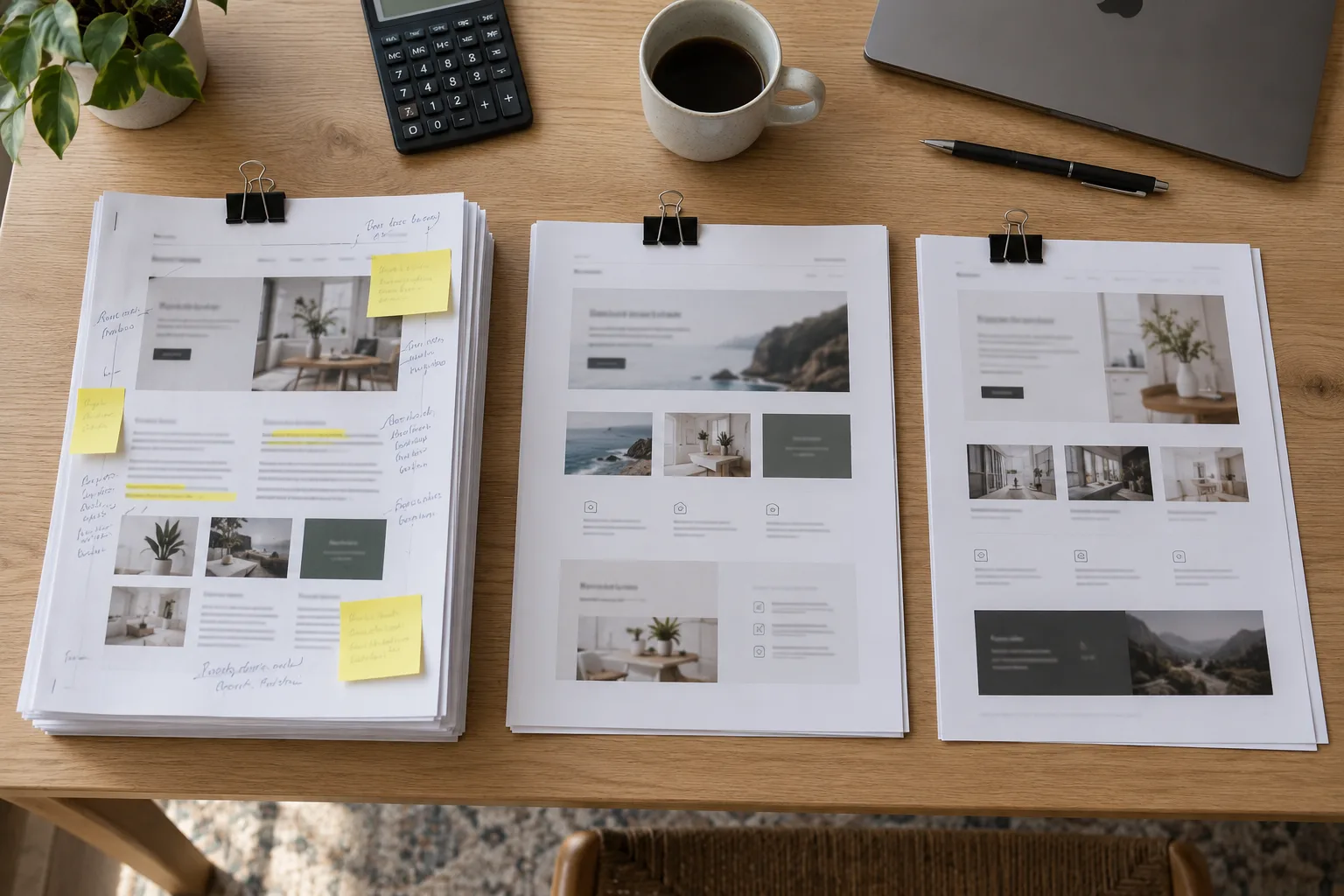
- Different scope assumptions. One quote assumes five templates and client-provided content. Another assumes ten templates, copywriting, and content migration. Both are “a marketing website,” but they are not the same project.
- Template configuration vs custom design. A theme modified to match your colors is not the same as a custom design system, component library, and responsive behavior defined at multiple breakpoints.
- Content responsibility. Who writes the copy, who sources imagery, who creates the case studies, who uploads and formats everything, and who handles approvals. If a quote is low, it often assumes you do most of this.
- Integrations and edge cases. A “HubSpot integration” can mean a basic form embed, or it can mean custom event tracking, lifecycle stages, attribution, and data hygiene. The same label can hide weeks of work.
- QA, accessibility, and browser support. A serious QA pass, accessibility testing aligned to WCAG expectations, and cross-browser verification cost time. Many cheap builds skip this, and the client pays later in bugs and rework.
- Who does the work. Some teams price with senior people doing architecture and review, and some price with juniors doing everything. Both can ship a site. Only one is likely to be smooth when requirements change.
If you want a practical way to compare proposals line by line, read how to read and compare a website design quote. It will help you spot what is missing before you sign.
The costs nobody quotes up front
The build price is rarely the lifetime cost. These are the line items that show up later if you do not ask about them early.
- Hosting and infrastructure: $20-$500+/month depending on traffic and whether you are running a static site, a CMS, or application servers.
- Domain, SSL, email: usually under $100/year combined for the basics, but still recurring and still required.
- Maintenance and updates: dependency patches, security, uptime monitoring, backups, and small improvements. Plan for 15-25% of the build cost annually, or a retainer.
- Performance work after launch: if you care about Core Web Vitals, you may need post-launch tuning based on real user data, third-party script behavior, and content growth.
- Accessibility fixes: if accessibility is treated as a final “audit,” you can end up paying twice. Building to WCAG expectations from the start is more predictable than retrofitting.
- Analytics and tracking governance: event tracking plans, consent management, and clean handoff to your marketing team are often not included unless you ask.
- Training and documentation: if your team needs to update the site, training should be explicit. If it is not, you will either avoid updates or pay for small changes forever.
The common pattern is simple. The cheapest quote often excludes everything that makes the site easy to run, easy to evolve, and safe to rely on.
The MDX Website Budget Check
Before you request quotes, answer these questions. If you cannot answer them yet, that is not a problem. It simply means you should budget for discovery first, and you should not treat early estimates as promises.
- What must the site do, in plain business terms? Lead capture, qualified demo requests, self-serve onboarding, customer login, resource library, application workflow, payments, or something else.
- How many page types and templates are you actually building? Home and about are pages. Services, case study, article, landing page, and location pages are templates. Quotes vary based on templates, not on how many times you reuse them.
- Is the content ready? Who owns copywriting, editing, and approvals. Are images and brand assets ready. Are you migrating content from an existing CMS.
- What integrations are required at launch? CRM, email marketing, scheduling, payments, auth, analytics, product data, or internal systems. List them, including who owns access and credentials.
- What accessibility and performance targets are non-negotiable? If you have requirements aligned to WCAG and Core Web Vitals, say so early. It changes design and engineering decisions.
- Who maintains it after launch? If you want the vendor to own updates, security, and ongoing improvements, ask for that structure up front. If your internal team will maintain it, ask for documentation and handoff.
MDX uses a version of this checklist at the start of every serious scoping conversation. It prevents “same title, different project” quotes and it shortens the path to a budget you can trust.
How to budget without getting burned
The most expensive mistake in web projects is not hourly rate. It is building the wrong thing, then paying again to rebuild it correctly. A short discovery phase that forces decisions and surfaces unknowns is usually the cheapest insurance you can buy.
A practical way to think about budget is by phase: discovery and architecture, design, build, QA, launch, then ongoing maintenance. When a vendor hands you one number without clarifying assumptions about content, integrations, and acceptance criteria, that number is a guess. You might still proceed, but do not treat it as a fixed commitment.
Match spend to the job. Paying custom app money for a brochure site is a fast way to waste budget. Trying to run a real platform on a $3,000 build is a fast way to lose time, lose trust internally, and end up rebuilding under pressure.
How MDX scopes and prices a website
MDX builds marketing sites and web platforms for SaaS companies, startups, and fintech teams that need the site to be fast, credible, and maintainable. We do not try to “win” projects with a number that only works if nothing changes. We start by reducing uncertainty, then we price based on what it will take to deliver.

Discovery and architecture
We map goals, audiences, and conversion paths. We define page types, content models, and navigation. We clarify integrations and tracking needs. This is where most budget surprises are prevented.
Design
We design the key templates and component system, with responsive behavior defined up front. If accessibility requirements matter for your risk profile, we build them into design decisions instead of treating them as a last-minute audit item.
Build
MDX commonly builds with React and Next.js. When the brand and story justify it, we add Three.js and WebGL for interactive experiences. If you are considering that direction, this guide on 3D website development cost explains what drives the increase.
QA and acceptance
We test critical flows, responsiveness, integrations, and content editing. We align performance work to measurable targets, and we treat accessibility as a build requirement, not a nice-to-have.
Launch and maintenance
Launch is not the finish line. After launch, most serious sites need monitoring, updates, and iterative improvements. Maintenance can be structured as 15-25% of the build cost per year or a retainer, depending on how you want support to work.
If you want to explore a specific build and see what tier it fits, start with custom web development. If you prefer a direct budget conversation, contact MDX and we will tell you what is realistic, including when a simpler option is enough.
Website costs outside the US
If you are budgeting outside the US, ranges can shift due to local rates, tax treatment, and vendor mix, but the cost drivers and the quote-reading principles stay the same. For country-specific context, see our guides for Canada, the UK, the UAE, and Australia.
The bottom line
In the US in 2026, the honest answer to “how much does a website cost” is tiered. Expect $0-$50/month for DIY, $2,000-$10,000 for a freelancer-built marketing site, $10,000-$40,000 for an agency-built marketing site, and $40,000-$150,000+ once your website becomes software. Separately, brochure and small business sites commonly fall in the $5,000-$20,000 range because they are a specific type of site, not a vendor tier.
The number that matters is not the lowest quote. It is whether the quote includes the responsibilities you actually need covered, now and after launch. That is how you avoid false savings.
FAQ
How much is the monthly fee for a website?
For DIY builders, expect $0-$50/month plus your time, and domain, SSL, and email usually under $100/year combined. For custom sites, hosting is typically $20-$500+/month, and maintenance is commonly 15-25% of the build cost per year (or a retainer), plus ongoing content and SEO work.
What are the types of websites?
The common categories are brochure and small business sites ($5,000-$20,000), content and publishing sites ($15,000-$50,000), e-commerce ($15,000-$100,000+), and custom web applications ($40,000-$150,000+). The right type depends on whether users only read, or they must do work inside the site.
Why do agency website prices vary so much?
Because the scope assumptions vary. One quote may include discovery, custom design, copy, CMS modeling, accessibility, performance, and QA. Another may assume a template, client-provided content, minimal QA, and limited post-launch support.
What is not included in a website quote that shows up later?
Common omissions are content creation and migration, analytics and tracking plans, accessibility remediation, performance tuning, integration edge cases, training, and ongoing maintenance. Ask vendors to list exclusions explicitly.
What can I use instead of a website?
You can start with a marketplace profile, a social media page, or a link-in-bio style landing page, but you do not fully control distribution, branding, or conversion paths. If the site is part of how you win trust and generate leads, owning your website is usually the safer long-term choice.
Related service: Business Automation Services